
National Painters provides tile and splashback painting across Melbourne. We assess the tile material, glaze, grout, existing coatings, heat exposure and moisture conditions before recommending a preparation and coating approach.
Book a free tile and splashback painting assessment before selecting colours or products.
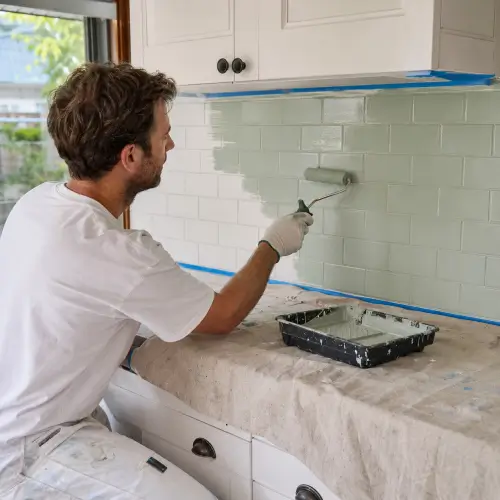
Start With Suitability, Not Just Colour
Tile painting suits stable, well-bonded tiles with no major cracking, movement, water damage or failing grout. The setting matters as much as the tile itself.
During inspection, we check material and glaze, coatings, chipped edges, grout, silicone, contamination, ventilation, cleaning, heat and water exposure. This indicates whether painting, repair or replacement is appropriate.
Where Tile and Splashback Painting Can Work
Suitable ceramic or glazed tiles may be assessed in kitchens, bathrooms, laundries and utility areas. A dated splashback, feature wall or laundry tile area can sometimes be refreshed to work with the room.
For landlords, this may improve presentation between tenancies. For homeowners, it can be a practical update before a larger renovation. Each assessment is surface-specific: painted tiles need products suited to their environment, not a standard plaster-wall system.
Heat, Water and Damage Limits
Not every tiled area should be painted. Tiles inside showers, areas affected by ongoing leaks, poorly ventilated wet zones, damaged grout or unsuitable heat may need another solution first.
We check for loose tiles, chipped glaze, cracks, grout failure, silicone issues, oil, soap film and cleaner residue. Painting over unresolved damage does not correct the cause. If replacement, waterproofing work or another repair is more appropriate, we explain that before confirming scope.
Preparation and Compatible Coatings
Smooth, glossy tile can resist new coatings without correct preparation. Preparation may include cleaning and degreasing, contaminant removal, suitable minor repairs, adhesion preparation, dust removal and masking around benchtops, tapware, cabinets and fixtures.
Compatible primers and coatings are selected after the tile, finish and room conditions are assessed. Grout lines normally remain visible; painting does not make a tiled wall seamless.
Two finish coats are common after suitable preparation and priming, although colour change, coverage, texture or repairs can require more. We explain curing and cleaning before normal room use.
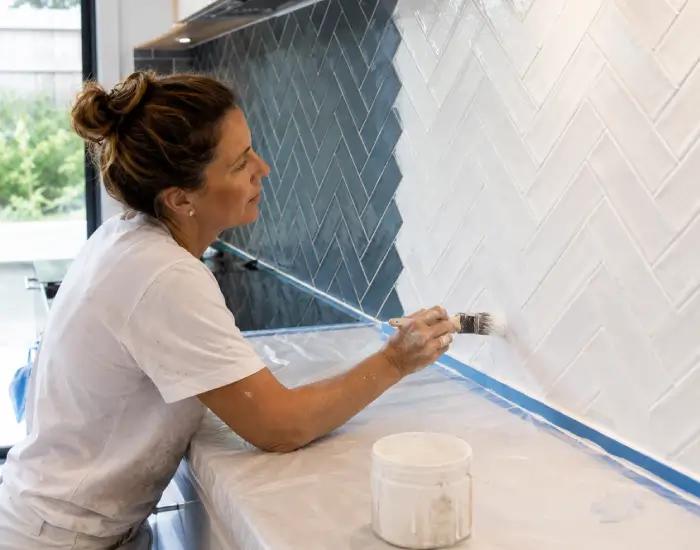
Our Tile and Splashback Painting Process
- Inspect: Review tile, grout, coating, heat and moisture exposure, access and fixtures.
- Define: Confirm suitability, preparation, repair boundaries, colours, products, finishes and coats.
- Prepare: Protect adjacent surfaces, clean, degrease, address suitable minor defects and prepare for adhesion.
- Prime and paint: Apply the compatible system with controlled edges around fixtures, joins and visible splashback areas.
- Review: Check colour, coverage and finish, then explain curing and care.
For connected walls and ceilings, see Kitchen & Bathroom Painting. Add Kitchen Cabinet Painting to coordinate cabinetry and tile.
Colour Planning for Kitchens, Bathrooms and Laundries
Colour can soften a busy tiled surface or make it a deliberate feature. Warm whites and light neutrals can brighten compact rooms; soft greys, muted greens and blues may suit timber, stone-look benchtops or contemporary tapware.
We offer practical painting guidance based on retained cabinetry, benchtops, flooring, tapware and light. We do not present ourselves as interior designers. Test samples and personal preference should guide the final colour.
Tile Painting or Replacement?
Painting can be a sensible option where tiles are stable, the layout remains useful and the proposed system is suitable for the room. It can update visual character without the disruption of removing sound tiles.
Before choosing a system, tell us how the room is used, which cleaning products are used and whether there have been leaks. These details help us determine suitability, preparation and appropriate protection around fixed fixtures.
Replacement may be preferable for loose, extensively cracked, water-damaged or heavily uneven tiles, ongoing moisture issues, unsuitable heat zones, damaged waterproofing or a planned layout change. An assessment helps distinguish a paintable surface from one needing more extensive work.
Tile and Splashback Painters Serving Melbourne
National Painters is locally owned in Ringwood and serves metropolitan Melbourne. Our four employed painters are qualified, hold relevant safety credentials, and work within a registered, appropriately insured business with more than 10 years of painting experience.
For a practical tile or splashback assessment, view our Areas We Serve page or request a free on-site quote today. For connected rooms beyond the tiled area, explore Interior Painting.
Frequently Asked Questions
Often, if they are stable, well bonded and suitable for the intended coating system. We assess the glaze, condition, location, water exposure and preparation requirements first.
Some splashbacks may be suitable after inspection. Heat exposure, grease, tile condition, grout, location and the proposed coating system must all be considered.
Suitable bathroom tile areas may be painted, but showers, ongoing moisture, poor ventilation and waterproofing concerns need careful assessment first. Not every bathroom tile area is suitable.
No. Grout lines usually remain visible because they form part of the tiled surface. Preparation and compatible coatings aim for an even result across the tiles and grout
Follow the curing guidance provided for the selected coating system. Once cured, use gentle, non-abrasive cleaning methods and avoid harsh products that may damage the finish.
Timing depends on surface area, tile condition, preparation, repair requirements, coat numbers and curing time. We explain the expected sequence and room-access requirements in the scope.
No. Painting cannot correct failed waterproofing, leaks or moisture damage. Those causes should be investigated and repaired before any compatible painting system is considered.
Area, tile condition, grout, contamination, repairs, heat or moisture exposure, access, masking detail, product system, coats and curing requirements all affect the scope and quote.